HYDROTHERMAL CARBONIZATION (HTC)
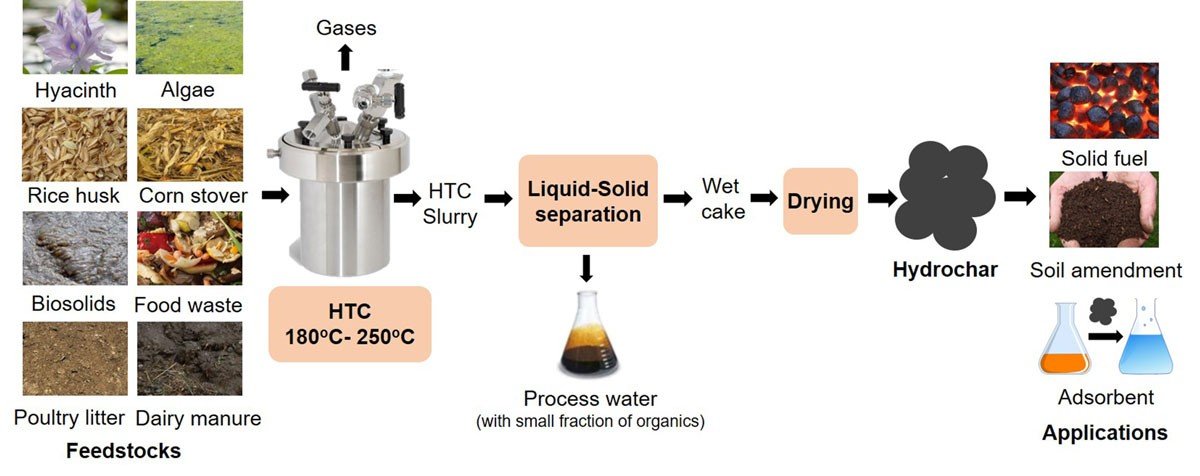
Hydrothermal carbonization (HTC) is a thermochemical process that converts wet organic biomass into a carbon-rich solid product called hydrochar. It uses hot compressed water under elevated pressure at temperatures between 180°C and 250°C, avoiding the need for energy-intensive pre-drying. Watch this detailed overview to understand the fundamentals of hydrothermal carbonization:

How It Works
-
- Aqueous environment: Water acts as a solvent, reactant, and heat-transfer medium under autogenous pressure.
- Chemical reactions: The process involves hydrolysis, dehydration, decarboxylation, aromatization, and condensation.
- No pre-drying: Wet feedstocks like sewage sludge, food waste, and digestate are processed directly, saving substantial energy.
Main Products
-
- Hydrochar: A solid, coal-like material with high energy density and improved dewatering traits.
- Process water: A liquid fraction containing dissolved organic compounds and valuable nutrients (like phosphorus and nitrogen).
- Gas phase: A minor amount of product dominated by carbon dioxide.
Key Applications
-
- Biofuel production: Serving as a renewable substitute for brown coal or solid fuel.
- Soil amendment: Improving soil quality and aiding carbon sequestration.
- Water remediation: Using hydrochar to absorb heavy metals and organic pollutants.
- Nutrient recovery: Reclaiming essential elements like phosphorus from waste streams.