AIR BATTERY ENERGY STORAGE
The system stores electricity using physical air pressure or cryogenic liquid air instead of scarce chemical minerals. The two primary designs are Compressed Air Energy Storage (CAES) and Liquid Air Energy Storage (LAES), which help stabilize power grids during extended drops in renewable generation.

How It Works
-
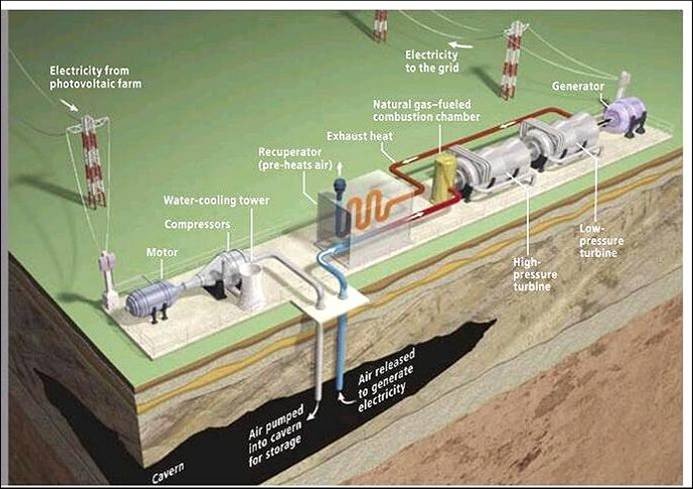
- Charging phase: Excess solar or wind electricity runs heavy compressors that pressurize air or chill it down to cryogenic liquid temperatures (-196°C).
- Storage phase: The pressurized gas is held in underground salt caverns or insulated surface tanks for hours, days, or multiple weeks.
- Discharging phase: Air is released or evaporated under high pressure to spin turbines and feed electricity back onto the electrical grid.
Key Benefits and Comparisons
-
- Lifespan: Operates for decades (up to 40 years) with minimal hardware degradation compared to chemical batteries.
- Materials: Relies entirely on abundant, non-toxic elements, avoiding lithium, cobalt, and rare earth supply chains.
- Duration: Ideal for long-duration storage (72 hours to multi-week spans) to counter prolonged cloudy or windless weather.